
OEM / project input
How OEM Titanium Product Projects Are Reviewed
The information that helps evaluate a custom titanium product brief without implying that every concept is feasible.
Direct answer
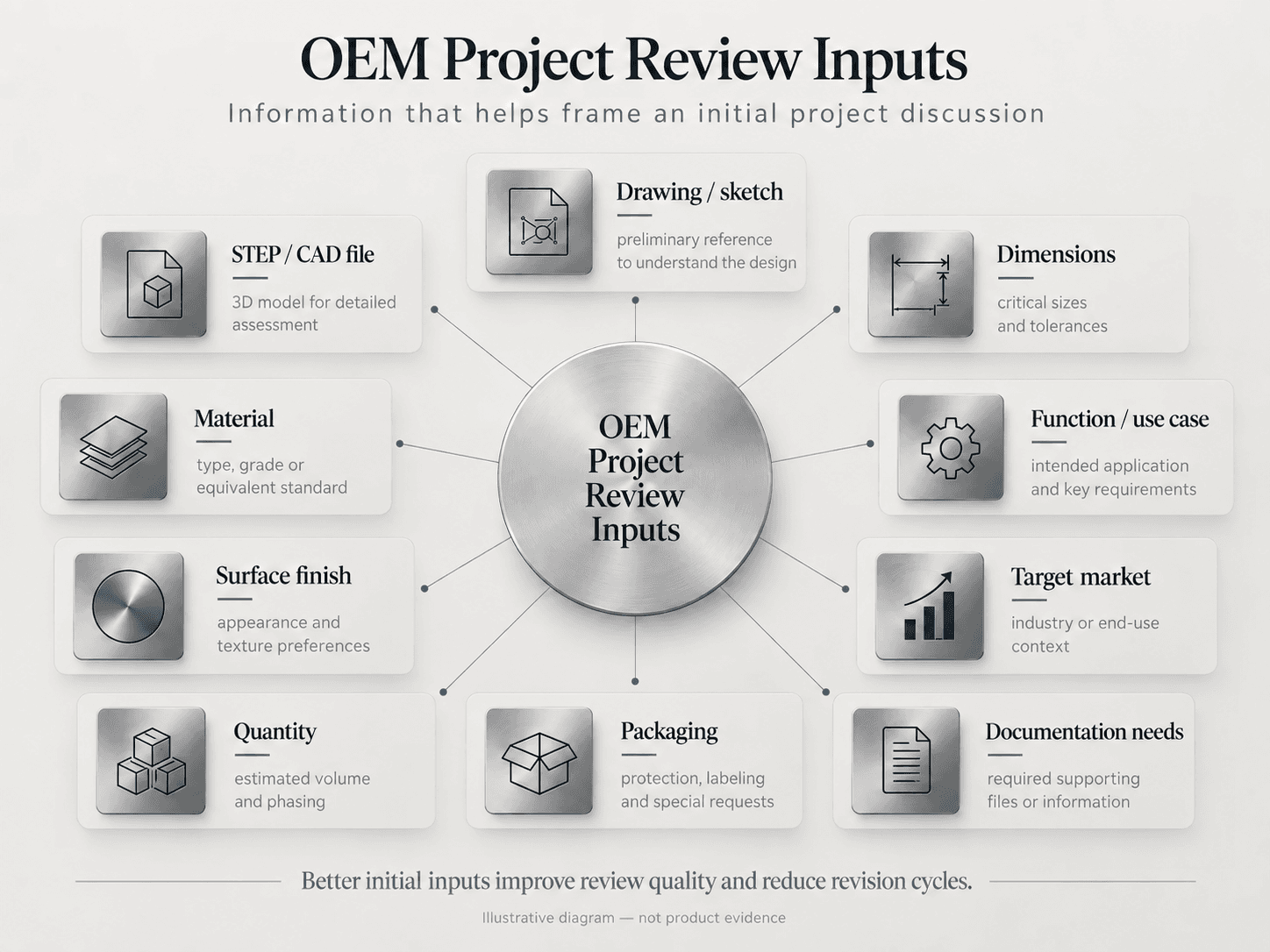
An OEM titanium project can be evaluated more usefully when the buyer provides the intended function, geometry, dimensions, material expectation, finish, packaging, market, quantity context, critical features and documentation needs. Feasibility remains a project-specific review, not a promise that every concept can be manufactured.
Key takeaways
- A complete first brief is helpful, but a drawing, reference sample or early concept can still start a review.
- Critical interfaces, tolerances and use conditions should be named early.
- Material, finish, packaging and documentation are connected decisions.
- Manufacturing and validation claims require product-specific evidence; a review process alone is not proof of capability.
Start with the decision the product must support
Explain what the product must do, where it will be sold and which features cannot change. A STEP file or drawing is useful when available, but photographs, a physical reference sample and a written brief can also clarify the first questions.
Avoid treating a visual reference as a complete specification. An image may not reveal wall construction, interface details, material condition, tolerances, internal components or the intended standard of approval.
Inputs that make the review more specific
The following checklist turns a general inquiry into a structured product review.
| Input | Why it matters | Typical review question |
|---|---|---|
| Drawing / STEP / 3D data | Defines geometry and interfaces | Which dimensions or joins are critical? |
| Function and use context | Frames product requirements | What must the product withstand or enable? |
| Material and finish expectation | Connects visual and technical decisions | Which parts, finish areas and sample targets apply? |
| Packaging and market | Shapes downstream requirements | What documentation, labels or pack constraints are relevant? |
| Quantity and timing context | Supports commercial planning | What needs confirmation before a route is proposed? |
Keep feasibility and evidence separate
A project review can identify questions and possible routes. It does not establish factory ownership, capacity, certification, final tolerances, test results or product compliance. Those claims require the relevant project, product and evidence records.
Use the review to agree what must be confirmed next: design changes, sample scope, validation criteria, documentation, packaging or a commercial quotation.
Questions buyers often ask
Do I need a finished drawing before contacting 7Titanium?
No. A reference sample, sketch or written concept can start the conversation, although clearer inputs enable a more specific review.
Does an RFQ prove feasibility?
No. Feasibility is reviewed against the actual product brief and remains subject to project-specific confirmation.
Should food-contact documentation be discussed at the start?
Yes. The target market and documentation needs should be identified early so their scope can be evaluated against the configuration.
Scope and evidence boundary
This article is educational. Product-specific material, finish, documentation, testing and compliance statements must be verified against the selected configuration and applicable market requirements.
References
- Technical Content Editorial Policy7Titanium · Explains the distinction between educational content and product-specific claims.
Have a configuration to review?
Share the product brief, target market and documentation question for a project-specific conversation.
Start your project